Ultra-Processed Food: The Health Risks We Can No Longer Ignore
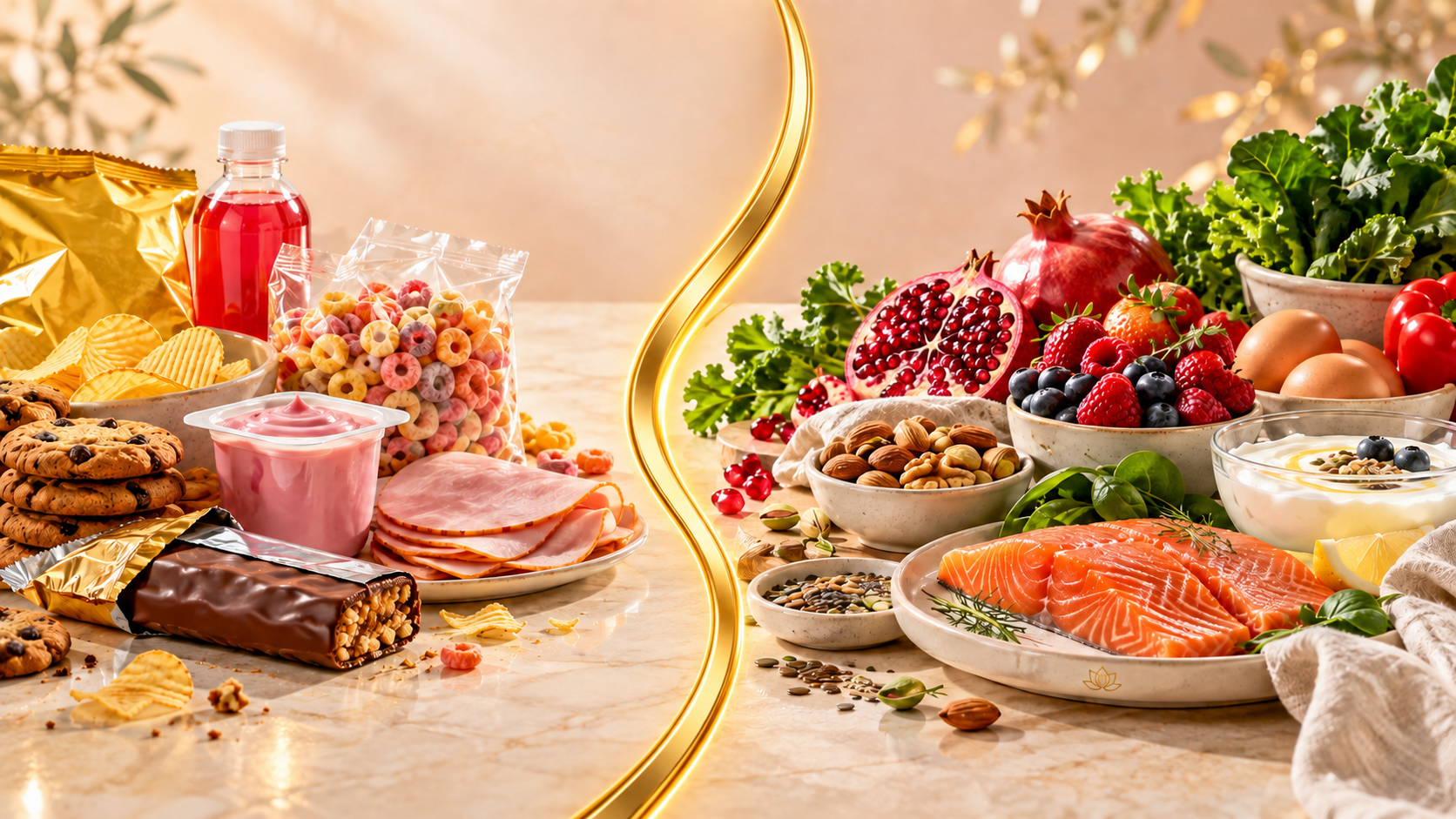
⚠️ THIS IS NO LONGER JUST ABOUT “UNHEALTHY FOOD”
Nearly 9 million people — and a finding that cannot be ignored
We tend to think of ultra-processed food as nothing more than crisps, sugary soft drinks and cheap fast food.
But today, it hides behind far more appealing descriptions:
🔸 “fitness bar”
🔸 “healthy breakfast”
🔸 “high-protein dessert”
🔸 “plant-based product”
🔸 “sugar-free”
🔸 “fortified with vitamins”
🔸 “made for children”
Attractive words on the packaging do not turn a product into real food.
⭕️ WHAT THE NEW RESEARCH FOUND
Researchers combined the results of 51 prospective studies, involving 8,819,894 adults from countries around the world. Follow-up periods ranged from 2 to 32 years.
People who regularly consumed larger amounts of ultra-processed food were found to have a higher risk of:
🔺 cardiovascular disease — approximately 24% higher
🔺 diabetes and metabolic syndrome — 24% higher
🔺 obesity — 23% higher
🔺 depression and anxiety disorders — 27% higher
🔺 digestive diseases — 31% higher
🔺 all-cause mortality — 18% higher
And there is one more figure worth paying attention to:
❗️Every additional 100 grams of ultra-processed food consumed per day was associated with an approximately 14% increase in cardiovascular risk.
One hundred grams is not a large amount. In everyday life, it can easily be reached with a single snack bar, one ready-made dessert, a few biscuits, some processed meat, a sugary drink or a supposedly “healthy” packaged snack.
⭕️ WHAT IS ULTRA-PROCESSED FOOD?
It is not simply food that has been cooked, frozen or placed in packaging.
Frozen berries, natural yoghurt, cheese, canned beans or vegetables without a complicated list of additives are not necessarily ultra-processed foods.
The term refers to industrial formulations in which whole foods have been partially replaced by:
🔸 refined starches;
🔸 glucose-fructose syrups;
🔸 hydrogenated or modified fats;
🔸 flavourings and flavour enhancers;
🔸 colourings and sweeteners;
🔸 emulsifiers, stabilisers and thickeners;
🔸 protein isolates and other industrially processed fractions.
These products are not created solely to nourish people.
They are designed to remain stable for longer, maintain a uniform texture, encourage us to eat more and generate maximum profit for the manufacturer.
⭕️ WHY CALORIES ALONE DO NOT EXPLAIN THE RISK
The problem is not limited to sugar, salt or the number of calories.
Ultra-processed foods often:
🔸 displace protein, fibre, vitamins and minerals;
🔸 are eaten quickly and provide less satiety;
🔸 combine sugar, fat, salt and flavourings in ways that encourage overeating;
🔸 cause sharper fluctuations in blood glucose;
🔸 may adversely affect the gut microbiome and intestinal barrier;
🔸 contribute to chronic low-grade inflammation and metabolic dysfunction.
Yet a person may not consider their diet unhealthy. They do not eat fast food every day — they simply buy breakfast cereals, long-life bread, ready-made sauces, sliced processed meats, sweetened yoghurts, protein desserts and “healthy” snacks on a regular basis.
⭕️ WHAT CAN WE DO IN PRACTICE?
You do not need to create a perfect diet overnight.
Begin with the choices you make every day:
✅ replace sugary drinks with water, mineral water or unsweetened tea;
✅ choose berries, nuts or natural yoghurt instead of a ready-made dessert;
✅ replace sausages and processed meat slices with eggs, fish, poultry or freshly cooked meat;
✅ choose eggs, natural yoghurt, buckwheat or other whole foods instead of sweetened cereals and breakfast products;
✅ select foods with short, understandable ingredient lists;
✅ prepare simple meals for two or three days at a time, so that tiredness does not constantly drive you towards ready-made food.
And perhaps most importantly, return to our roots by cooking more often at home using simple, whole ingredients. Home-cooked food gives us back control over what goes into our meals, the quality of the ingredients and what we are truly using to nourish ourselves and our families.
The answer is not simGradually, industrially produced food becomes the foundation of their diet.
⭕️ HOW TO RECOGNISE AN ULTRA-PROCESSED PRODUCT
Look at the ingredients list.
If it contains a long list of substances that would not normally be found in a home kitchen, it is worth taking a closer look.
Pay particular attention when the first ingredients include:
❌ sugar or syrups;
❌ modified starch;
❌ hydrogenated fats;
❌ maltodextrin;
❌ flavourings;
❌ flavour enhancers;
❌ several different sweeteners;
❌ emulsifiers, colourings and stabilisers.
However, there is no need to fear every E-number or throw away everything that comes in packaging. What matters is assessing the product itself, its basic ingredients, its overall composition and the place it occupies in your daily diet.
ply to “eat less”.
We need to bring real food back into our diets — vegetables, leafy greens, berries, eggs, fish, meat, legumes when tolerated, nuts, seeds, natural fermented dairy products and good-quality fats.
❗️It is important to understand that this meta-analysis demonstrates a consistent association, but it does not prove that every individual ultra-processed product will inevitably cause disease.
However, when observations involving nearly nine million people continue to point in the same direction, it is more sensible not to wait for absolute proof, but to look today at how much of our diet comes from nature — and how much comes from the food industry.
Packaging may promise health.
But your body does not absorb advertising.
It absorbs the ingredients 🪷