MAGNESIUM — THE MINERAL THAT HELPS THE BODY WORK IN HARMONY
PART 1
Magnesium is often called the mineral of calm, but its role extends far beyond relaxation. It acts as a helper — a cofactor — for more than 300 enzyme systems and is involved in a vast number of biochemical reactions.
What exactly does magnesium do?
⚡ Energy and Metabolism
Magnesium is essential for:
• converting food into energy;
• producing and using ATP — the cell’s main energy “currency”;
• metabolising carbohydrates, proteins, and fats;
• glycolysis and cellular respiration;
• the normal processing and utilisation of glucose;
• maintaining the cells’ sensitivity to insulin.
🧠 The Nervous System
Magnesium is involved in:
• transmitting nerve impulses;
• regulating the excitability of nerve cells;
• supporting neurotransmitter function;
• maintaining normal psychological function;
• helping the body relax after nervous stimulation;
• supporting mechanisms that influence sleep, resilience to stress, and concentration.
However, insomnia, anxiety, or fatigue do not always indicate magnesium deficiency — these conditions can have many different causes.
💪 Muscles and Movement
Magnesium helps:
• muscles contract and relax normally;
• regulate the movement of calcium and potassium across cell membranes;
• support neuromuscular transmission;
• maintain normal muscle tone;
• support recovery after physical activity.
❤️ The Heart and Blood Vessels
Magnesium is essential for:
• maintaining a normal heart rhythm;
• conducting electrical impulses through the heart muscle;
• the contraction and relaxation of the myocardium;
• maintaining normal blood vessel tone;
• the physiological regulation of blood pressure;
• maintaining electrolyte balance.
It is important to remember that although magnesium is involved in these processes, magnesium supplements are not a substitute for the treatment of arrhythmia or high blood pressure.
🦴 Bones and Teeth
Approximately half of the magnesium in the body is found in bone tissue. Magnesium is involved in:
• forming the structure of bones;
• mineralising bones and teeth;
• calcium and phosphorus metabolism;
• supporting vitamin D function;
• maintaining the normal function of the parathyroid glands, which regulate mineral metabolism;
• the continuous renewal of bone tissue.
🧬 Cells, Proteins, and Genetic Material
Many fundamental processes would be impossible without magnesium, including:
• protein synthesis;
• DNA formation and repair;
• RNA synthesis;
• cell division and renewal;
• enzyme function;
• production of the antioxidant glutathione;
• maintenance of cell membrane stability.
💧 Electrolyte Balance
Magnesium helps regulate the movement of calcium, potassium, and other ions across cell membranes. This is essential for:
• nerve impulses;
• muscle contractions;
• heart rhythm;
• fluid and electrolyte balance;
• normal cellular function.
🌱 Where Can We Find Magnesium?
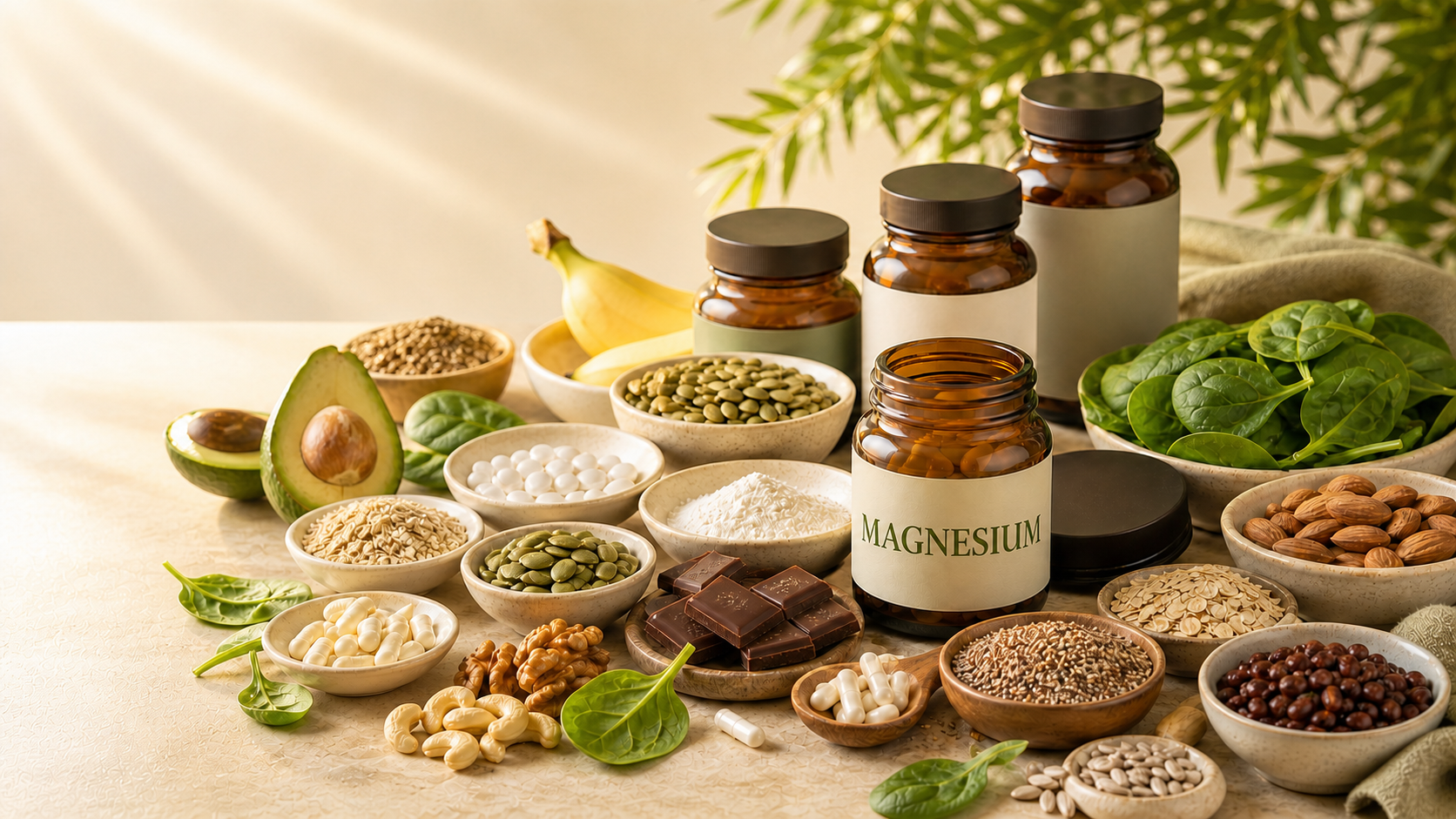
First and foremost, in everyday foods:
• pumpkin seeds;
• almonds, cashews, and other nuts;
• pulses and legumes;
• wholegrain foods;
• green leafy vegetables;
• avocados;
• cocoa;
• dairy products.
A varied diet provides the best foundation — not the uncontrolled consumption of supplements.
⚠️ Important to Remember
Magnesium is an essential mineral, but it is not a universal remedy for every symptom. Fatigue, muscle cramps, sleep disturbances, and heart palpitations can have many different causes.
Excessive magnesium from supplements can cause diarrhoea, nausea, and abdominal cramping. The risk of magnesium accumulation is particularly high in people with kidney disease. Magnesium can also interact with certain antibiotics, osteoporosis medications, diuretics, and other medicines.
For this reason, magnesium supplements and their dosage should be selected individually — particularly for people with chronic health conditions, during pregnancy, or when taking medication regularly.
Magnesium does not perform miracles. It simply carries out an immense, quiet, and vitally important job inside us every single day. 🌿
To learn how to choose the right form of magnesium, read Part 2